Network-based global bioregionalization of terrestrial gastropods
DOI:
https://doi.org/10.68729/8d64m869Keywords:
biogeography, bioregionalization, terrestrial gastropods, endemism, conservationAbstract
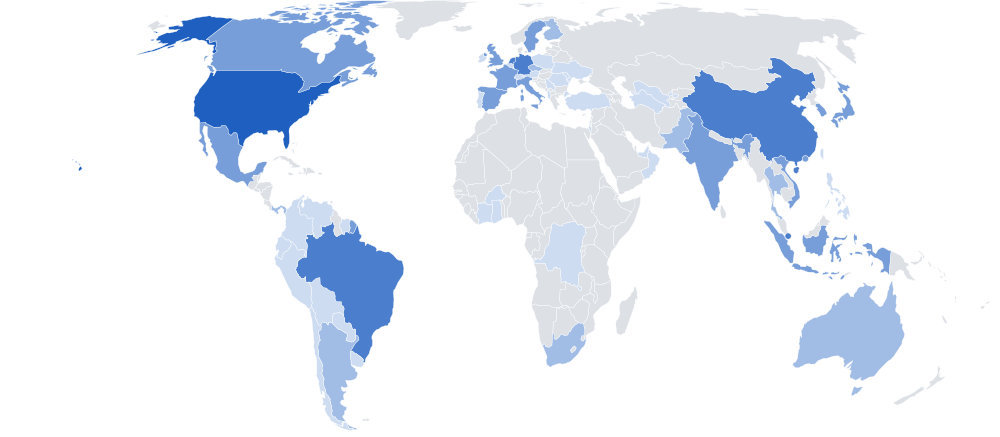
Global bioregionalization provides a framework for assessing large-scale patterns of species distributions and biodiversity. Here, we delineated global bioregions for terrestrial gastropods using species occurrence data from GBIF and compared the resulting patterns with previous biogeographical schemes for terrestrial organisms. We compiled 1,414,131 georeferenced occurrence records representing 17,229 species from six major terrestrial gastropod clades and analysed their spatial distribution using the Infomaps Bioregions 2 algorithm. The analysis identified 14 biogeographical regions, broadly consistent with major bioregions previously proposed for terrestrial organisms. Most continental regions were recovered, including the Nearctic, Neotropical, Palearctic, Ethiopian, Oriental, and Australian regions. The main differences involved insular territories, with the Antillean, Malagasy, Tristanian, Sub-Antarctic, Neozelandic, Melanesian, and Micronesian-Polynesian regions recovered as distinct bioregions. This stronger differentiation of island faunas may reflect their geographic isolation and high levels of endemism. Our results provide a global biogeographical framework for terrestrial gastropods and highlight the importance of insular regions in shaping their distribution patterns.
References
Barker GM (2001) The biology of terrestrial molluscs. CABI, Wallingford, 576 pp.
Barker GM (2002) Molluscs as crop pests. CABI, New York, 472 pp.
Barnes DK, Kaiser S, Griffiths HJ, Linse K (2009) Marine, intertidal, freshwater and terrestrial biodiversity of an isolated polar archipelago. Journal of Biogeography 36(4): 756–769.
Bouchet P, Rocroi JP, Hausdorf B, Kaim A, Kano Y, Nützel A, Parkhaev P, Schrödl M, Strong EE (2017) Revised Classification, Nomenclator and Typification of Gastropod and Monoplacophoran Families. Malacologia 61(1–2): 1–526.
Bridges AE, Barnes DK, Bell JB, Ross RE, Howell KL (2021) Benthic assemblage composition of South Atlantic seamounts. Frontiers in Marine Science 8: 660648.
Cabrera AL, Willink A (1973) Biogeografía de América Latina. Monografía 13, Serie de Biología. OEA, Washington, 120 pp.
Capinha C, Essl F, Seebens H, Moser D, Pereira HM (2015) The dispersal of alien species redefines biogeography in the Anthropocene. Science 348: 1248–1251.
Carta A, Peruzzi L, Ramírez-Barahona S (2022) A global phylogenetic regionalization of vascular plants reveals a deep split between Gondwanan and Laurasian biotas. New Phytologist 233: 1494–1504.
Chapman AD (2009) Numbers of Living Species in Australia and the World, 2nd edition. Australian Biological Resources Study, Canberra, 78 pp.
Chiba S, Cowie RH (2016) Evolution and extinction of land snails on oceanic islands. Annual Review of Ecology, Evolution, and Systematics 47(1): 123–141.
Chiba S, Roy K (2011) Selectivity of terrestrial gastropod extinctions on an oceanic archipelago and insights into the anthropogenic extinction process. Proceedings of the National Academy of Sciences 108(23): 9496–9501.
Cox CBC (2001) The biogeographic regions reconsidered. Journal of Biogeography 28: 511–523. https://doi.org/10.1046/j.1365-2699.2001.00566
Daniels LD, Veblen TV (2000) ENSO effects on temperature and precipitation of the Patagonian–Andean region: implications for biogeography. Physical Geography 21: 223–243. https://doi.org/10.1080/02723646.2000.10642707
Dinerstein E, Olson D, Joshi A, Vynne C, Burgess ND, Wikramanayake E, Hahn N, Palminteri S, Hedao P, Noss R, Hansen M, Locke H, Ellis EC, Jones B, Barber CV, Hayes R, Kormos C, Martin V, Crist E, Sechrest W, Price L, Baillie JEM, Weeden D, Suckling K, Davis C, Sizer N, Moore R, Thau D, Birch T, Potapov P, Turubanova S, Tyukavina A, De Souza N, Pintea L, Brito JC, Llewellyn OA, Miller AG, Patzelt A, Ghazanfar SA, Timberlake J, Klöser H, Shennan-Farpón Y, Kindt R, Lillesø JPB, Van Breugel P, Graudal L, Voge M, Al-Shammari KF, Saleem M (2017) An ecoregion-based approach to protecting half the terrestrial realm. Bioscience 67: 534–545.
Echeverry A, Morrone JJ (2013) Generalised tracks, area cladograms and tectonics in the Caribbean. Journal of Biogeography 40: 1619–1637. https://doi.org/10.1111/jbi.12117
Edler D, Guedes T, Zizka A, Rosvall M, Antonelli A (2017) Infomap bioregions: interactive mapping of biogeographical regions from species distributions. Systematic Biology 66(2): 197–204.
Edler D, Holmgren A, Rojas A, Calatayud J, Rosvall M, Antonelli A (2023) Infomap Bioregions 2-Exploring the interplay between biogeography and evolution. arXiv:2306.17259. https://doi.org/10.48550/arXiv.2306.17259
Ennen JR, Agha M, Sweat SC, Matamoros WA, Lovich JE, Rhodin AGJ, Iverson JB, Hoagstrom CW (2020) Turtle biogeography: Global regionalization and conservation priorities. Biological Conservation 241: 108323.
Escalante T (2017) A natural regionalization of the world based on primary biogeographic homology of terrestrial mammals. Biological Journal of the Linnean Society. Linnean Society of London 120: 349–362.
Escalante T, Rodríguez-Tapia G, Morrone JJ (2021) Toward a biogeographic regionalization of the Nearctic region: area nomenclature and digital map. Zootaxa 5027: 351–375. https://doi.org/10.11646/zootaxa.5027.3.3
Espinosa DO, Ocegueda SC, Aguilar CZ, Flores OV, Llorente-Bousquets J (2008) El conocimiento biogeográfico de las especies y su regionalización natural. In: Sarukhán J (Ed) Capital natural de México, Conocimiento actual de la biodiversidad, vol I. Conabio, Mexico City, 33–65.
Falaschi M, Marta S, Lo Parrino E, Roll U, Meiri S, Ficetola GF (2023) Global bioregions of reptiles confirm the consistency of bioregionalization processes across vertebrate clades. Global Ecology and Biogeography 32(8): 1272–1284.
Ficetola GF, Thuiller W, Mazel F, Falaschi M, Marta S (2021) Determinants of zoogeographical boundaries differ between vertebrate groups. Global Ecology and Biogeography 30: 1796–1809.
Fleming CA (1987) Comments on Udvardy’s biogeographical realm Antarctica. Journal of the Royal Society of New Zealand 17: 195–200. https://doi.org/10.1080/03036758.1987.10423348
GBIF.org (2025) GBIF Home Page. Accessed at https://www.gbif.org on 2025-12-09.
Good R (1963) The geography of the flowering plants, 3rd ed. Longman, London, 518 pp.
Gross CP, Wright AM, Daru BH (2025) A global biogeographic regionalization for butterflies. Philosophical Transactions B 380: 20230211.
He J, Lin S, Li J, Yu J, Jiang H (2020) Evolutionary history of zoogeographical regions surrounding the Tibetan plateau. Communications Biology 3: 1–9.
Hermogenes de Mendonça L, Ebach MC (2020) A review of transition zones in biogeographical classification. Biological Journal of the Linnean Society 131(4): 717–736. https://doi.org/10.1093/biolinnean/blaa120
Holgate MW (1960) The fauna of the mid-Atlantic islands. Proceedings of the Royal Society of London. Series B. Biological Sciences 152(949): 550–567.
Holt BG, Lessard J-P, Borregaard MK, Fritz SA, Araujo MB, Dimitrov D, Fabre P-H, Graham CH, Graves GR, Jonsson KA, Nogues-Bravo D, Wang Z, Whittaker RJ, Fjeldsa J, Rahbek C (2013) An update of Wallace's zoogeographic regions of the world. Science 339: 74–104.
IUCN (2025) The IUCN Red List of Threatened Species. Version 2025-2. Available from http://www.iucnredlist.org (date of access 09/Dec/2025).
Kano Y, Chiba S, Kase T (2002) Major adaptive radiation in neritopsine gastropods estimated from 28S rRNA sequences and fossil records. Proceedings of the Royal Society of London. Series B: Biological Sciences 269(1508): 2457–2465.
Klassa B, Santos CMD (2015) Areas of endemism in the Neotropical region based on the geographical distribution of Tabanomorpha (Diptera: Brachycera). Zootaxa 4058: 519–534. https://doi.org/10.11646/zootaxa.4058.4.4
Kreft H, Jetz W (2010) A framework for delineating biogeographical regions based on species distributions. Journal of Biogeography 37: 2029–2053.
Lu XT, Gu QY, Limpanont Y, Song LG, Wu ZD, Okanurak K, Lv ZY (2018) Snail-borne parasitic diseases: an update on global epidemiological distribution, transmission interruption and control methods. Infectious Diseases of Poverty 7: 28.
Marshall DJ, Hugo-Coetzee EA, Coetzee L, Ueckermann EA, Seeman O, Chown SL (2025) The mite fauna (Arachnida: Acari) of Gough Island, South Atlantic Ocean: natural colonization, endemism and human introduction. Polar Biology 48(3): 89.
Mazel F, Wüest RO, Lessard J-P, Renaud J, Ficetola GF, Lavergne S, Thuiller W (2017) Global patterns of β-diversity along the phylogenetic time-scale: The role of climate and plate tectonics. Global Ecology and Biogeography 26: 1211–1221.
MolluscaBase eds (2025) MolluscaBase. Available from https://www.molluscabase.org (date of access 09/Dec/2025). https://doi.org/10.14284/448
Moon KL, Chown SL, Fraser CI (2017) Reconsidering connectivity in the sub‐Antarctic. Biological Reviews 92(4): 2164–2181.
Morrone JJ (2014) Biogeographic regionalization of the Neotropical region. Zootaxa 3782: 1–110. https://doi.org/10.11646/zootaxa.3782.1.1
Morrone JJ (2015) Biogeographical regionalisation of the world: A reappraisal. Australian Systematic Botany 28: 81–90.
Morrone JJ (2017) Neotropical biogeography: regionalization and evolution. CRC Press, Boca Raton, 312 pp.
Morrone JJ (2020) The Mexican Transition Zone: a natural biogeographic laboratory to study biotic assembly. Springer, Cham, 191 pp.
Morrone JJ, Ebach MC (2022) Toward a terrestrial biogeographical regionalisation of the world: historical notes, characterisation and area nomenclature. Australian Systematic Botany 35(3): 187–224.
Nicolai A, Ansart A (2017) Conservation at a slow pace: terrestrial gastropods facing fast-changing climate. Conservation Physiology 5(1): cox007.
Procheş S, Ramdhani S (2012) The world's zoogeographical regions confirmed by cross-taxon analyses. Bioscience 62: 260–270.
Proios K, Cameron RA, Triantis KA (2021) Land snails on islands: building a global inventory. Frontiers of Biogeography 13(2): e51126.
Ribeiro GC, Santos CMD, Olivieri LT, Santos D, Berbert JM, Eterovic A (2014) The world’s biogeographical regions revisited: global patterns of endemism in Tipulidae (Diptera). Zootaxa 3847: 241–258. https://doi.org/10.11646/zootaxa.3847.2.4
Rueda M, Rodríguez MÁ, Hawkins BA (2013) Identifying global zoogeographical regions: Lessons from Wallace. Journal of Biogeography 40: 2215–2225.
Santos D, Ribeiro GC (2022) Areas of endemism in the Afrotropical region based on the geographical distribution of Tipulomorpha (Insecta: Diptera). Austral Ecology 47: 92–113. https://doi.org/10.1111/aec.13137
Schilder FA (1956) Lehrbuch der Allgemeinen Zoogeographie. Gustav Fischer, Jena, 150 pp.
Sclater WL, Sclater PL (1899) The geography of mammals. Kegan Paul, Trench, Trübner and Co., London, 335 pp.
Shen X, Zhang S, Shen Q, Guilin HU, Jiqi LU (2021) Multivariate similarity clustering analysis: A new method regarding biogeography and its application in global insects. Integrative Zoology 16: 390–403.
Sommeria-Klein G, Watteaux R, Ibarbalz FM, Pierella Karlusich JJ, Iudicone D, Bowler C, Morlon H (2021) Global drivers of eukaryotic plankton biogeography in the sunlit ocean. Science 374: 594–599.
Speiser B (2001) Food and Feeding Behaviour. In: Barker GM (Ed) The Biology of Terrestrial Molluscs. CABI, New York, 259–288.
Takhtajan A (1986) Floristic regions of the world. University of California Press, Berkeley, 522 pp.
Vermeij GJ, Watson-Zink VM (2022) Terrestrialization in gastropods: lineages, ecological constraints and comparisons with other animals. Biological Journal of the Linnean Society 136(3): 393–404.
Whittaker RJ, Araújo MB, Jepson P, Ladle RJ, Watson JEM, Willis KJ (2005) Conservation biogeography: Assessment and prospect. Diversity and Distributions 11: 3–23.
GBIF.org (08 October 2025) GBIF Occurrence Download https://doi.org/10.15468/dl.3vm3yn
GBIF.org (08 October 2025) GBIF Occurrence Download https://doi.org/10.15468/dl.t4y3cb
GBIF.org (08 October 2025) GBIF Occurrence Download https://doi.org/10.15468/dl.9wgm6s
GBIF.org (08 October 2025) GBIF Occurrence Download https://doi.org/10.15468/dl.m8984r
GBIF.org (08 October 2025) GBIF Occurrence Download https://doi.org/10.15468/dl.34habe
GBIF.org (08 October 2025) GBIF Occurrence Download https://doi.org/10.15468/dl.wv985u
Downloads
Published
Data Availability Statement
The authors confirm that the data supporting the findings of this study are available within the article and supplementary material.
Issue
Section
License
Copyright (c) 2026 Ariel La Pasta, João Pedro Gonçalves Oliveira, Brunno Henryco, Vinicius Padula (Author)

This work is licensed under a Creative Commons Attribution 4.0 International License.
Usage rights are regulated through the Creative Commons License. According to the Creative Commons Attribution Licence CC BY 4.0, anyone (the author, their institution/company, the publisher, and the public) is free to copy, distribute, transmit, and adapt the work as long as the original authors are credited.